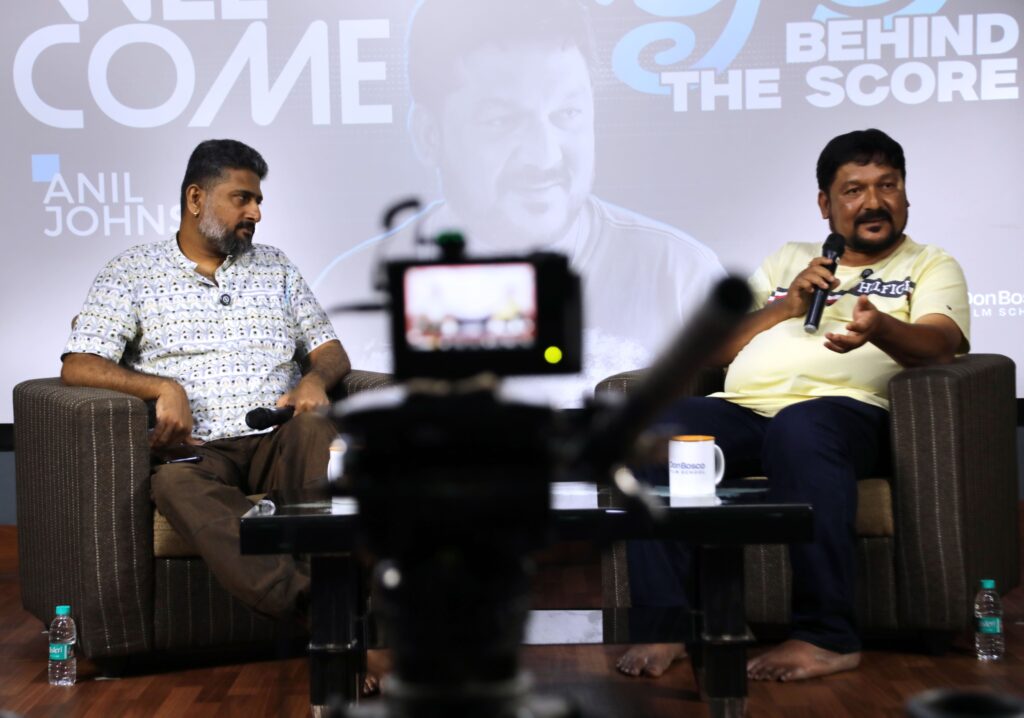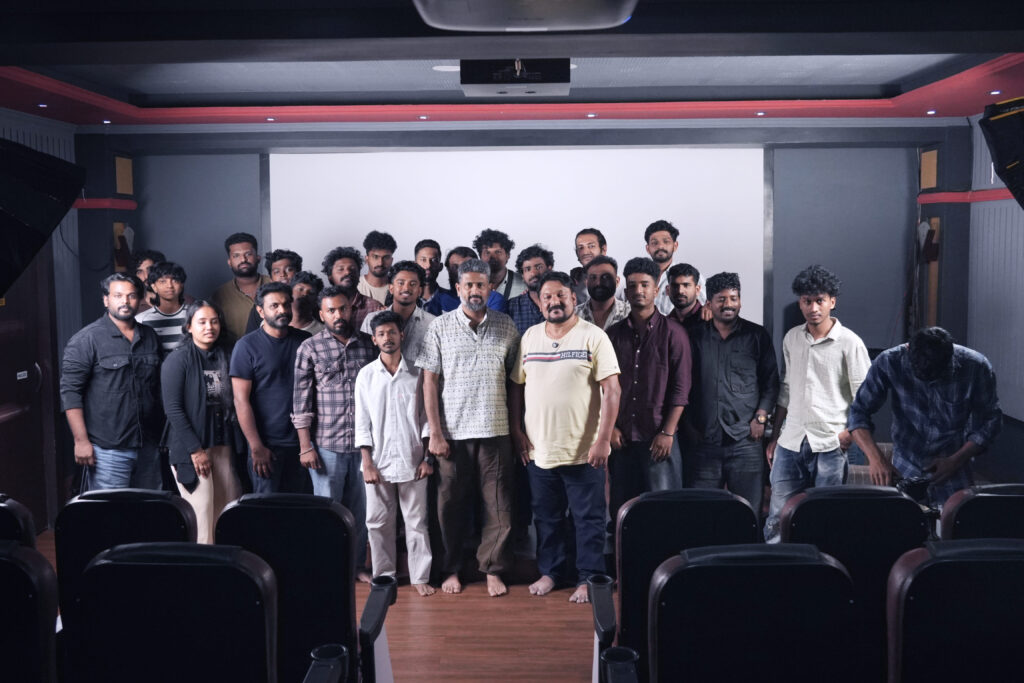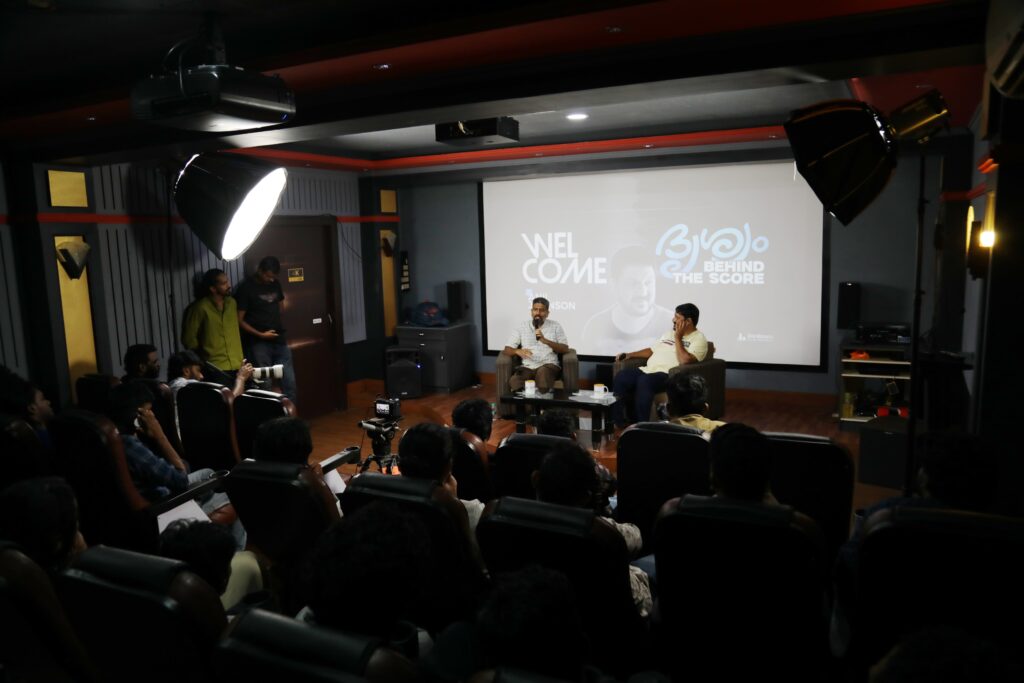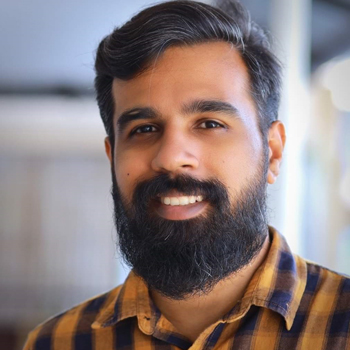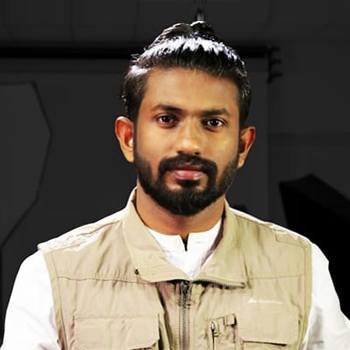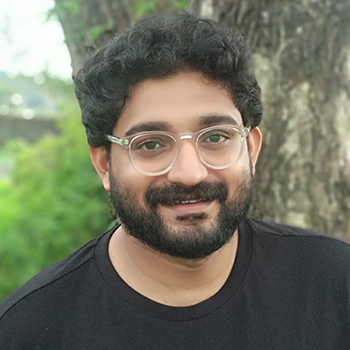

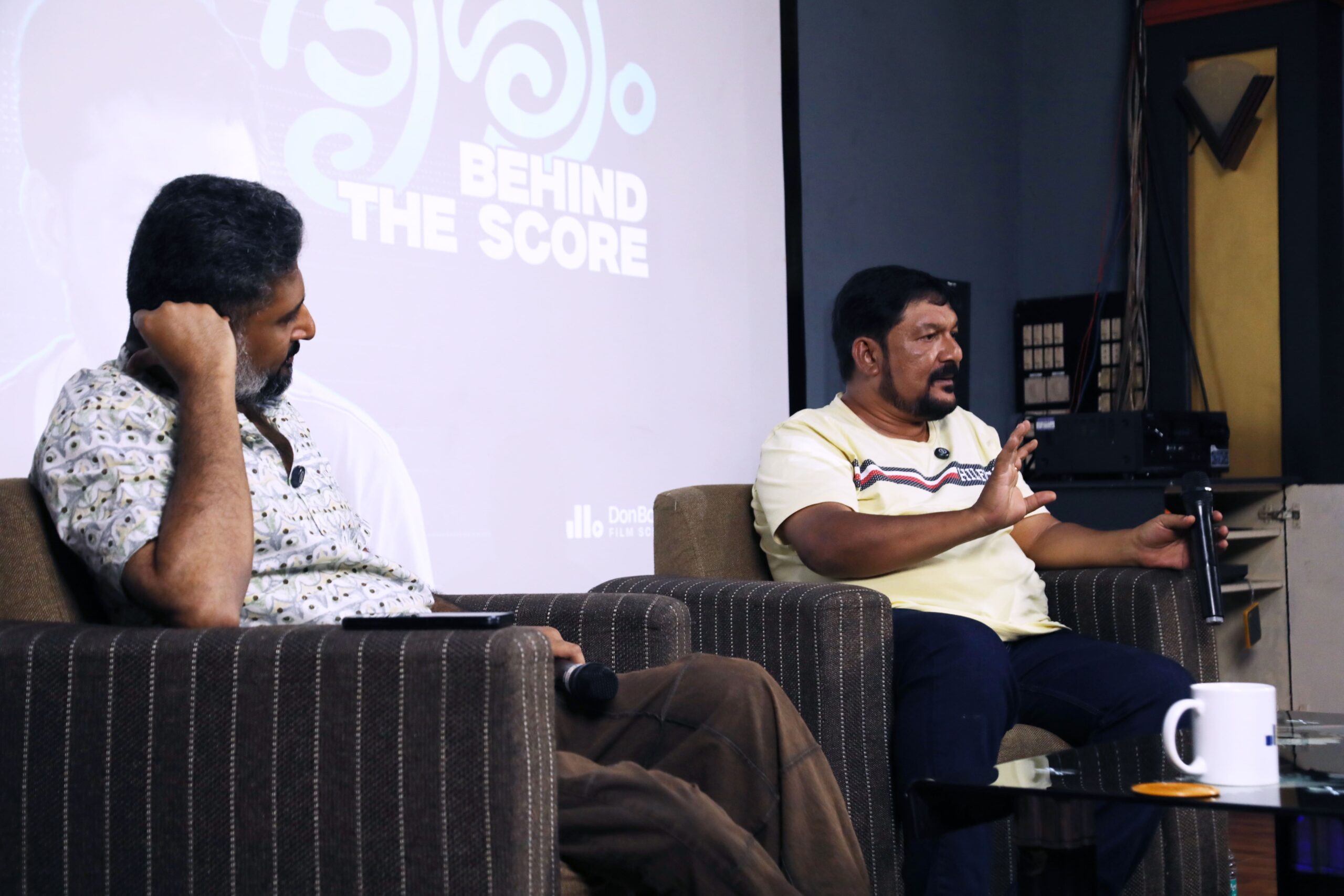
Don Bosco Film School welcomed composer and record producer Anil Johnson for a session that landed at a fitting moment — just weeks after Drishyam 3 wrapped up its theatrical run as one of the biggest Malayalam releases of the year. As the composer behind the entire Drishyam franchise, scoring Drishyam (2013), Drishyam 2 (2021), and now Drishyam 3, Anil has spent over a decade shaping the sound of one of Malayalam cinema’s most-loved thrillers, and he used the session to pull back the curtain on exactly how that sound gets made.
He began with his own path into the industry — training in Carnatic classical music and piano as a child, a degree in Music Production, and years working as an arranger for other composers before he ever got to write a film’s score in his own name. That groundwork, he told students, is where the real education happens, long before anyone hands you a film to score on your own.
Most of the session focused on the Drishyam films, which gave him a chance to talk about scoring not as a single decision but as a process repeated and refined across three films. He walked students through how he reads a scene before writing a single note — what the moment needs to feel like, and how easy it is to score a thriller wrong by reaching for music that pushes too hard instead of trusting the silence. Drishyam, he pointed out, works because its tension is built on restraint, and the score has to follow that same instinct rather than work against it. He spoke about the challenge of carrying a musical identity across a trilogy spanning over a decade — keeping Drishyam 3 recognisably part of the same world as the first film, while still scoring a story that had moved on.
A recurring thread through the talk was how little of scoring happens in isolation. Anil spoke about the constant back-and-forth with the director, the editor, and the sound design team — how a cue that works perfectly on its own can fall apart once it’s sitting against the edit, and how the final emotional effect of a scene is really a negotiation between picture, sound, and music rather than any one department’s call.
Students stayed engaged well past the formal Q&A, all of them walking away with refreshed outlooks and fresh ideas. For students training across departments at Don Bosco Film School, hearing how closely music, picture, and sound have to move together — straight from someone who’s done it across several films and over a decade — was exactly the kind of cross-department insight the school aims to build into its training.